
A a modern hotel perfectly situated in the heart of Sapporo, it is also steps away from the bustling Tanukikoji Shopping Street and the iconic Odori Park. It offers a convenient base for exploring city attractions and nearby ski resorts, like Sapporo Teine. Guests can enjoy comfortable, well-appointed rooms, a pizza restaurant and bar.
Opened in 1914 as Japan’s first French-style landscape garden, the park sprawls across a hillside near Gora Station, offering panoramic Hakone mountain views. Features include a vibrant rose garden with over 1,000 bushes, tropical greenhouses showcasing exotic plants and insects, manicured lawns, fountains, and seasonal blooms like cherry blossoms, azaleas, and hydrangeas. Hands-on workshops in glassblowing, pottery, and tea ceremonies add interactive fun, while cafes provide relaxation spots.
The musuem opened in 2002 within Fuji-Hakone-Izu National Park, showcases over 9,500 works amassed by Pola cosmetics founder Tsuneshi Suzuki. Highlights include Impressionist masterpieces by Monet, Renoir, and Cézanne, plus Picasso, Van Gogh, and contemporary pieces in galleries blending seamlessly with surrounding forests via underground architecture and natural light.
The field transforms into a silvery sea from late September to early November, when tall susuki grass sways in the wind across 180,000 square metres on Mount Hakone’s slopes. Recognised among Kanagawa’s top 50 scenic spots and 100 flower sites, the wide trail allows immersive walks amid golden autumn hues, offering Fuji views on clear days. Spring features controlled burns for regrowth, preserving this historic grassland once used for thatching roofs.
Founded in 757 during the Nara Period, the shrine stands majestically on Lake Ashi’s shores, enveloped by ancient cedars. Revered by warriors like Minamoto Yoritomo and Tokugawa Ieyasu for protection and victory, it honors deities for safe travels along the historic Tokaido Road. Iconic features include the vibrant red “Peace Gate” torii rising from the water and the Gongen-zukuri main hall.
Known as “Great Boiling Valley,” it is an active volcanic crater in Hakone, formed by an eruption about 3,000 years ago. Steaming sulfur vents, hot springs, and bubbling pools create a dramatic, otherworldly landscape with a strong egg-like smell from hydrogen sulfide. Visitors ride the Hakone Ropeway for stunning aerial views, often spotting Mount Fuji on clear days. Try the famous kuro-tamago (black eggs) boiled in geothermal waters—eating one adds seven years to your life, per legend.
It is Japan’s first outdoor art museum opened in 1969, spans 70,000 square meters, showcasing around 120 modern sculptures by artists like Rodin, Henry Moore, and Picasso amid lush greenery and mountain views. Highlights include the Picasso Pavilion with over 300 works, stained-glass installations, indoor galleries, cafes, and a foot bath. Easily accessible via Hakone Tozan Railway from Chokoku-no-Mori Station (2-minute walk).
The resort immerses guests in Hakone’s stunning mountain landscapes, south of Tokyo, near Mount Fuji and Lake Ashi. This serene retreat features spacious Japanese-Western style rooms, complete with tea facilities, microwaves, and forest views — no elevators, shoes off in some units. On-site public onsens offer therapeutic hot springs, alongside a restaurant, tennis court, and kids’ games room.
The temple dates to 642 AD and houses what many believe is Japan’s first Buddhist statue – a hidden golden Amida Buddha brought from Korea. This inclusive site, unaffiliated with any sect, has drawn pilgrims for 1,400 years, offering salvation to all regardless of status, with rituals like the rare Gokaicho unveiling every seven years. Its massive 1707 wooden hall, inner passages (Naisen), and surrounding museums highlight Edo-era pilgrimage culture amid scenic streets.
It is Japan’s largest interconnected ski area in Yamanouchi, spans 18 ski fields across 600 hectares with elevations from 1,340m to 2,307m. Hosted Olympic events in 1998, it offers over 80km of trails for all levels, reliable powder snow from November to May, and terrain parks, connected by 48 lifts and shuttles. Summer hiking and onsen nearby enhance its appeal in Joshinetsu Kogen National Park.
The resort is located in Hakone’s Gora Onsen district, blending Western architecture with Japanese elegance. Just a two-minute walk from Hakone Gora Park known for its French-style gardens, guests staying at the resort enjoy public onsens with renowned hot springs, mountain views, and on-site facilities like a kids room and restaurant.
It is Japan’s largest wasabi cultivation site in Azumino City, spans 15 hectares along the clear snowmelt streams from the Northern Alps. Established in 1915, it produces over 150 tons annually using pristine, 13°C water ideal for the shade-loving plant, with picturesque watermills, walking paths, and wasabi-themed eateries offering ice cream, soba, and beer. Free entry draws visitors for scenic hikes and farm tours year-round.
The castle is a National Treasure in Matsumoto City, renowned as the “Crow Castle” for its striking black exterior and elegant five-story keep built between 1593-1594. Constructed during the Sengoku period under lords like Ishikawa Kazumasa, its intricate wooden interior features steep stairs, trapdoors, and defensive apertures for arrows and stones. One of Japan’s few original castles surviving in authentic form, it offers panoramic views and hosts seasonal festivals.
Togakushi Shrine comprises five ancient shrines – Okusha, Chusha, Hokosha, Kuzuryusha, and Hinomikosha – nestled at the base of sacred Mount Togakushi in Myōkō-Togakushi Renzan National Park. Linked to Japanese mythology where deity Tajikarao hurled a cave door to reveal the sun goddess Amaterasu, it dates back over 1,200 years, evolving from a Shugendo ascetic center with ninja training ties.
The park is famous for wild Japanese macaques – known as snow monkeys – bathing in natural hot springs. Located in Joshinetsu Kogen National Park at 850 metres elevation, visitors reach it via a 30-40 minute forested hike from Kanbayashi Onsen, about 45 minutes by bus from Nagano Station. Open year-round, winter (December-March) offers the iconic snowy scenes, while monkeys roam freely in this “Hell Valley” habitat.
The resort is in the upscale resort town of Karuizawa, offering serene mountain views and a peaceful retreat amid lush woods. Guests unwind in spacious rooms with traditional Japanese bathrooms featuring bathtubs and showers, accommodating up to six in family suites. Amenities include bike rentals (seasonal), an on-site restaurant serving European cuisine and regional specialties, spa facilities, pet-friendly options, and a gift shop.
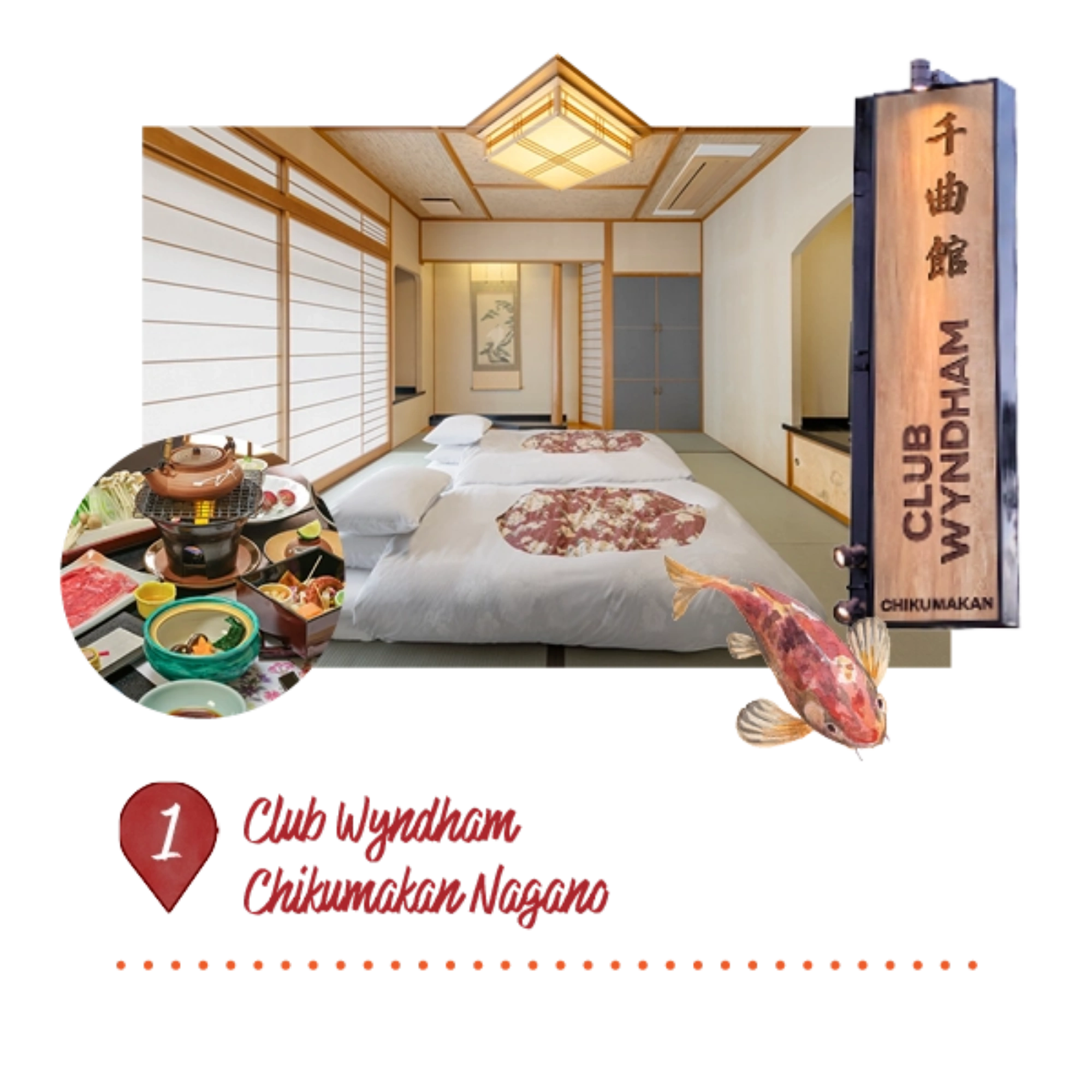
A traditional Japanese Ryokan resort in scenic Nagano, blends Western and authentic Japanese styles across its 36 rooms. Guests enjoy indoor and outdoor onsens with natural hot spring water renowned for skin benefits, meticulously prepared meals featuring Shinshu specialties and seasonal local ingredients, and amenities like a cocktail bar, karaoke, gardens, and banqueting halls for up to 130 people.
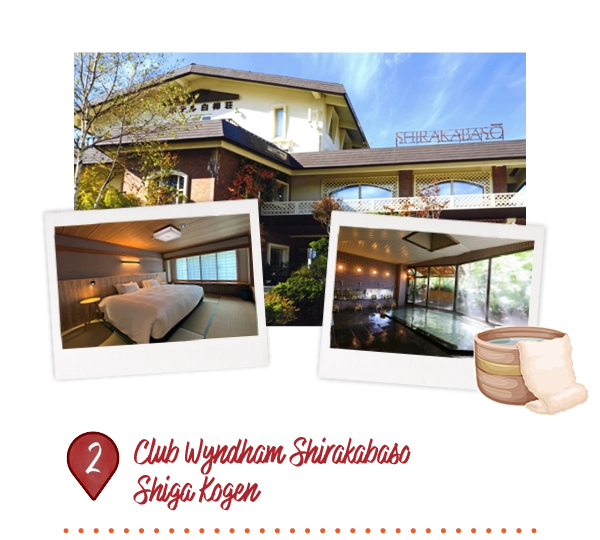
The resort offers ski-in/ski-out access in Asia’s largest ski area, Shiga Kogen, with over 80 km of trails from the 1998 Nagano Olympics site. Recently refurbished, its 32 rooms blend traditional Japanese style with modern minimalism, including twin, king, and Japanese futon options, plus amenities like indoor/outdoor onsens, sauna, and ski rentals. Diners enjoy revitalised buffets, a new pizza bar, and an upcoming whisky bar.
A traditional Japanese Ryokan resort in scenic Nagano, blends Western and authentic Japanese styles across its 36 rooms. Guests enjoy indoor and outdoor onsens with natural hot spring water renowned for skin benefits, meticulously prepared meals featuring Shinshu specialties and seasonal local ingredients, and amenities like a cocktail bar,gardens, and banqueting halls for up to 130 people.
The museum showcases the lifelong work of artist Itchiku Kubota (1917-2003), who revived the lost Muromachi-era tsujigahana dyeing technique for kimonos. Over 100 vibrant, nature-inspired silk garments form the “Symphony” series, displayed in a striking pyramid-like main hall of ancient cypress beams and a Gaudí-inspired coral stone wing.
The lake is the second largest of the Fuji Five Lakes in Yamanashi Prefecture, sitting at Mount Fuji’s northern base and renowned for its stunning reflections of the iconic peak, especially during cherry blossom season or autumn foliage. Formed by volcanic activity, it spans approximately 15.3 square kilometres at 833 meters elevation, supporting boating, fishing, and watersports.
The resort overlooks the largest Fuji Five Lake, nicknamed Swan Lake for its graceful birds, in Yamanashi Prefecture. Multi-level maisonette rooms feature wood or garden views, twin beds or futons, with mini kitchen in each room. Amenities include a bath (not onsen), kids’ games room, and BBQ area.
The resort nestles at Mount Fuji’s foothills by Lake Kawaguchi, blending Japanese tradition with modern comforts. Guests enjoy panoramic lake and Fuji views from spacious rooms. Onsite highlights include public onsen baths, sauna, restaurant, BBQ area, kids’ games room and free bike rentals (seasonal).
The pagoda is a striking five-story vermilion structure in Fujiyoshida City and serves as a peace memorial built in 1963 within Arakurayama Sengen Shrine grounds. Perched 400 steps up Mount Arakura, it honours fallen soldiers from World War II and earlier conflicts. Its Edo-period-inspired architecture frames breathtaking views of snow-capped Mount Fuji, especially amid 800 cherry blossoms in spring or autumn foliage.
It is a historic arch bridge spanning the Katsura River gorge in Ōtsuki City. Designated a Place of Scenic Beauty, it exemplifies the rare hanebashi cantilever design with beams anchored into cliff faces, eliminating central supports. Dating to the Edo Period as part of the Kōshū Kaidō highway, its elegant structure inspired ukiyo-e prints by Hiroshige and Hokusai. Legends claim monkeys bridged the chasm, earning its “monkey bridge” name.
The lake is the largest and highest-elevation lake among the Fuji Five Lakes, lies closest to Mount Fuji at 980 metres above sea level. Formed by ancient lava flows, its shallow waters support boating, fishing, windsurfing, camping, and paragliding. Stunning Fuji reflections grace its shores, especially during “Diamond Fuji” sunrises.
It is a historic hot spring resort, known as a “treasure trove” with 11 distinct spring sources and diverse mineral properties, some with skin-beautifying effects. Nestled in a picturesque valley within Nikko National Park, the area features numerous suspension bridges, over 70 waterfalls, and lush hiking trails ideal for autumn foliage viewing.
Nasu Safari Park offers an immersive drive-through experience with around 700 animals from 70 species roaming freely. Visitors can use their own car, rent one, or ride the special “Lion Bus” to see animals up close. A key highlight is feeding herbivores like giraffes and elephants, and even giving meat to lions and tigers through a protective mesh.
The museum is a beautiful stone building inspired by traditional English manor houses. It houses an extensive collection of 19th-century antique stained glass from Britain, filling the interior with vibrant, colourful light. Visitors can enjoy daily pipe organ and music box performances within its three chapels, creating a serene, medieval European atmosphere.
The Nasu Ropeway offers easy access to Mount Chausu (1,915 m), the highest and only active volcano in the Nasu mountain range. A four-minute aerial ride takes visitors to the 9th station, where panoramic views of the Kanto Plain and volcanic smoke are visible. From the top station, it is a roughly 40 to 50-minute hike to the summit. The scenery changes beautifully with the seasons, from spring azaleas to stunning autumn foliage.
Nasu Animal Kingdom is a sprawling theme park divided into the indoor “Kingdom Town” and the scenic “Kingdom Farm.” It offers immersive encounters with over 600 animals, including red pandas, capybaras, and Pallas’s cats. Visitors can enjoy spectacular bird-of-prey shows and feed farm animals while taking in panoramic views of the Nasu Highlands.
Nasu Highland Park is the largest amusement park in the northern Kanto region, nestled in the scenic landscapes of Tochigi. It offers over 40 attractions, including 10 roller coasters, making it a paradise for thrill-seekers and families. The park is uniquely pet-friendly, with specific rides and cafes designed for both visitors and their dogs.
The resort nestles at the foot of Mount Nasu within Nikko National Park. This serene retreat offers spacious apartments amid volcanic highlands, featuring barbecue areas, public onsen hot springs, and children’s facilities for family relaxation. Guests enjoy nearby hiking, cheese farms, and craft beers in this nature-rich escape.
The shrine dates to around 710 AD, founded when a fisherman caught a divine wooden statue in his nets, leading to its establishment under a sacred camphor tree. Renowned for its 2,000-year-old camphor tree – a National Natural Monument with a 23.9-meter trunk circumference – believed to grant longevity (one circumambulation adds a year to life). This power spot enshrines gods of fortune, health, and nature, drawing pilgrims via forested paths.
A vast 10,000-hectare highland at Mount Fuji’s southwest base in Fujinomiya City, it enchants with misty mornings, lush pastures, and dairy farms producing fresh milk and cheese. At 800-900 metres elevation, it offers stunning Fuji vistas, ranches for animal interactions, camping at Lake Tanukiko, hiking, zip lines, and cycling amid ranches like Fuji Milk Land.
This natural wonder captivates as one of Japan’s most beautiful waterfalls. This 150-metre-wide, 20-metre-high cascade resembles delicate white silk threads tumbling from a lava cliff, fed by pristine Fuji snowmelt in Fuji-Hakone-Izu National Park – a UNESCO World Heritage site and Natural Monument since 1936. Year-round scenic walks, bridges, and Mt. Fuji views draw visitors, with peak flow in spring and summer.
A modern replica built in 1959 atop Nishikigaura Mountain in Atami City, the castle mimics Momoyama-period architecture despite no historical predecessor. This five-story concrete tower serves as a panoramic observatory 160 metres above sea level, offering stunning 360-degree views of Sagami Bay, Atami coastline, and distant landmarks like Tokyo Skytree on clear days. Inside, museums showcase Edo-period artifacts, samurai armor, swords, and erotic ukiyo-e prints, with cherry blossoms blooming in spring gardens.
The resort complements the main Club Wyndham Sundance Izu-Kogen resort on Japan’s scenic Izu Peninsula, offering serene, spacious rooms with modern comforts like air conditioning, select kitchenettes, and refrigerators for a home-like feel. Guests indulge in relaxing onsens, saunas, and thoughtful amenities including a lounge, games room, and on-site restaurant serving breakfast and dinner.
The resort provides a serene escape on Japan’s Izu Peninsula, featuring comfortable rooms with modern amenities and stunning coastal views. Guests enjoy relaxing public onsens, sauna, spacious gardens, barbecue areas, games room, and an onsite restaurant, blending Japanese tradition with leisure.
The resort offers a coastal retreat along Atami Bay, blending Japanese tradition with modern comforts in elegantly appointed rooms featuring ocean views. Guests relax in a therapeutic public onsen with famed hot springs, enjoy gourmet dining highlighting local flavours, seaside barbecues, and amenities like a lounge, children’s room, games room, and pet-friendly options (conditions apply).
Echigo-Yuzawa Onsen Town thrives as a vibrant winter resort, just 80 minutes by Shinkansen from Tokyo. Famous for heavy snowfall and over 1,000 years of hot spring history, it boasts alkaline waters soothing muscles and skin in ryokans, public baths, and unique sake-infused onsens at Ponshukan.
Known as Yuzawa Museum of History and Folklore, the museum immerses visitors in the “Snow Country” world of Nobel laureate Yasunari Kawabata’s famous novel set in Yuzawa. Housed in a traditional keyaki wood gabled farmhouse, it displays artifacts from Jomon period sites, folk tools, and recreated rooms like heroine Komako’s.
The Echigo Sake Museum at Echigo-Yuzawa Station celebrates Niigata’s status as Japan’s top sake-producing prefecture. Housed in the CoCoLo Yuzawa facility, it showcases over 90 local breweries with interactive exhibits on brewing history, rice varieties, and Echigo toji master brewers. Visitors sample 100+ sakes at Kikizake Bansho, enjoy sake baths, and shop souvenirs like sake-infused sweets.
Futai Dam, often enjoyed as part of the scenic Futaiko lakeside area, is a rock-fill dam on the Kiyotsu River. Rising 87 metres, it forms an emerald-green reservoir sometimes called Lake Futai, framed by Naeba’s forested mountains that glow with autumn colors. The dam serves as the lower reservoir for the Oku-Kiyotsu pumped-storage power station and can be viewed from Naeba Dragondola and nearby scenic routes.
Naeba Dragondola is Japan’s longest gondola lift at 5,481 metres, connecting Naeba Ski Resort to Tashiro Ski Resort. Named for its dragon-spine-like path over mountains, it offers panoramic views of Lake Futai, valleys, and forests – vibrant with autumn foliage or winter snow. Popular for skiing access and year-round sightseeing.
The ski resort ranks among the nation’s largest, spanning 134 hectares with 24 varied runs for all skill levels. Connected by a 5.5 km gondola to Kagura Ski Resort, it offers 46 km of total skiing terrain, snow parks, and family activities.
The resort offers a cosy base for ski adventures at Naeba Ski Resort, just minutes away. This family-friendly property features spacious suites with panoramic mountain views, blending Japanese tradition and modern comfort, including heated floors and a laundry facility. Guests enjoy on-site dining with local cuisine and a lounge. It is located approximately 80 minutes from Tokyo by train.
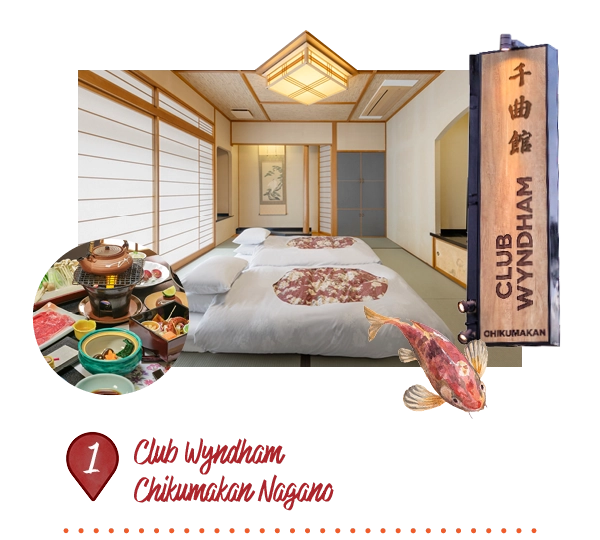
A traditional Japanese Ryokan resort in scenic Nagano, blends Western and authentic Japanese styles across its 36 rooms. Guests enjoy indoor and outdoor onsens with natural hot spring water renowned for skin benefits, meticulously prepared meals featuring Shinshu specialties and seasonal local ingredients, and amenities like a cocktail bar, karaoke, gardens, and banqueting halls for up to 130 people.