Japan on a Budget: Tips to Keep Your Trip Cost Low, Yet Memorable
When planning a trip, everyday expenses typically include accommodation, transportation, food, and activities. What makes a trip budget-friendly is the choices you make in each of these areas. With a few calculated decisions, you can enjoy any destination without breaking the bank and Japan is no exception.
With thoughtful planning, you can explore Japan’s vibrant cities, stunning natural landscapes, delicious cuisine, and rich cultural heritage. In this guide, we’ll show you how to experience Japan on a budget, with experiences that strike the perfect balance between value, comfort and unforgettableness.
Key Highlights
- Choose the right travel month, use budget transport, and eat like a local for a surprisingly affordable Japan trip.
- Plan your trip well in advance to avoid peak season prices, consider hostels or guesthouses and visit places that require no to low entry fees.
- Resorts like Club Wyndham Sundance Resort Kawaguchiko (near Mount Fuji) let you enjoy stunning views while avoiding city stays.
Smart ways to explore Japan without overspending
Transportation can quickly become one of the most significant travel expenses but there are plenty of ways to ensure affordable travel.
Rail passes
If you’re planning multiple long-distance trips, rail passes can be a game-changer. The Japan Rail (JR) Pass offers unlimited rides on most JR lines, including Shinkansen bullet trains and limited express trains. You can purchase it online through the official JR Pass website or licensed overseas agents before your trip.
The pass offers unlimited rides on JR trains for one, two, or three weeks. It comes in two types: ordinary and green car. Green cars (also known as first-class cars) offer more spacious seats than ordinary ones. Here’s how much a JR pass costs for adult travelers:
Duration | Green Car | Ordinary Car |
7-day | ¥70,000 | ¥50,000 |
14-day | ¥110,000 | ¥80,000 |
21-day | ¥140,000 | ¥100,000 |
Note: Prices are subject to change.
A regional pass might be more economical depending on the places you’re visiting. For example, a 4-day stay in Tokyo, 3 days in Kyoto and 3 days in Osaka could be better covered by the JR Kansai Wide Area Pass.
Note: In October 2023, rail pass prices increased by around 70%. For a low-cost trip to Japan, you should compare trains with other modes of transport in terms of both cost and duration, and go for the option that makes sense to you.
Subway and metro
In Tokyo, the average cost of a subway and metro ticket ranges between ¥180 and ¥300 (approximately USD1.20 to USD2) per ride. Prepaid cards like Welcome Suica and the Pasmo Passport make travel convenient with contactless payments on most public transport.
Buses
Overnight buses typically cost less than bullet trains and can even save you a night’s accommodation. Highway bus fares between Tokyo and Kyoto range from ¥4,000 to ¥12,000 (approximately USD27 to USD81), depending on the coach’s class and departure time.
By foot
Within cities, the biggest savings and arguably the richest experiences can be found by exploring on foot. Walking lets you uncover charming backstreets and hidden gems that give Japan its unique character.
Tasting Japan on a budget: Eat well, spend less
Food is one of the highlights of Japan, where you can also save the most. If you’re wondering “how much should I budget for a trip to Japan?”, the good news is that eating well doesn’t have to be expensive.
- Convenience stores (Konbini): Lawson, Family Mart and 7-Eleven are your best friends. You can enjoy onigiri (rice balls), sandwiches, bento boxes, and more for just ¥200 to ¥500 (approximately USD1.35 to USD3.50).
- Street food: Osaka’s takoyaki (octopus balls) or Tokyo’s taiyaki (fish-shaped pastries) often cost less than a cup of coffee, making them one of the best options for Japan on a budget.
- Set meals (Teishoku): These hearty combos typically include rice, soup, pickles, and a main dish, usually priced under ¥1,000 (approximately USD7).
- Sushi without the splurge: You don’t need to visit high-end sushi bars. Conveyor-belt sushi chains and standing sushi counters offer decent to good quality at affordable prices.
- Supermarket discounts: Head to supermarkets in the evening, when fresh meals like sushi, tempura and bentos are typically heavily discounted.
- Rice bowls (Donburi): Chains like Yoshinoya and Sukiya serve donburi (rice bowls topped with beef, chicken, or vegetables) for just a few hundred Yen.
- Lunch specials: Many restaurants offer lunch sets at lower prices compared to dinner. It’s a great way to enjoy local flavours at half the cost.
- Markets and local snacks: Exploring markets not only immerses you in local culture but also gives you access to authentic flavours without the high price tag of formal dining. This is also an opportunity to explore markets that are “less touristy”.
Hidden gems and free experiences in Japan
When calculating the average cost of travel in Japan, incorporating free and low-cost experiences into your itinerary can make your trip far more budget-friendly.
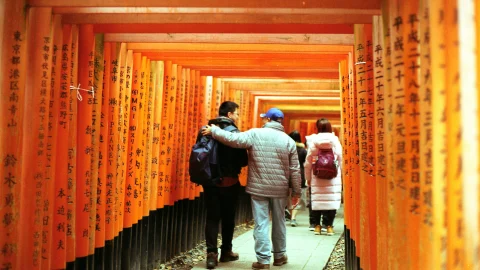
- Shrines and temples: Many Shinto shrines and Buddhist temples are open to the public at no charge. Don’t miss Tokyo’s Meiji Shrine, Senso-ji, or Kyoto’s Fushimi Inari Taisha.
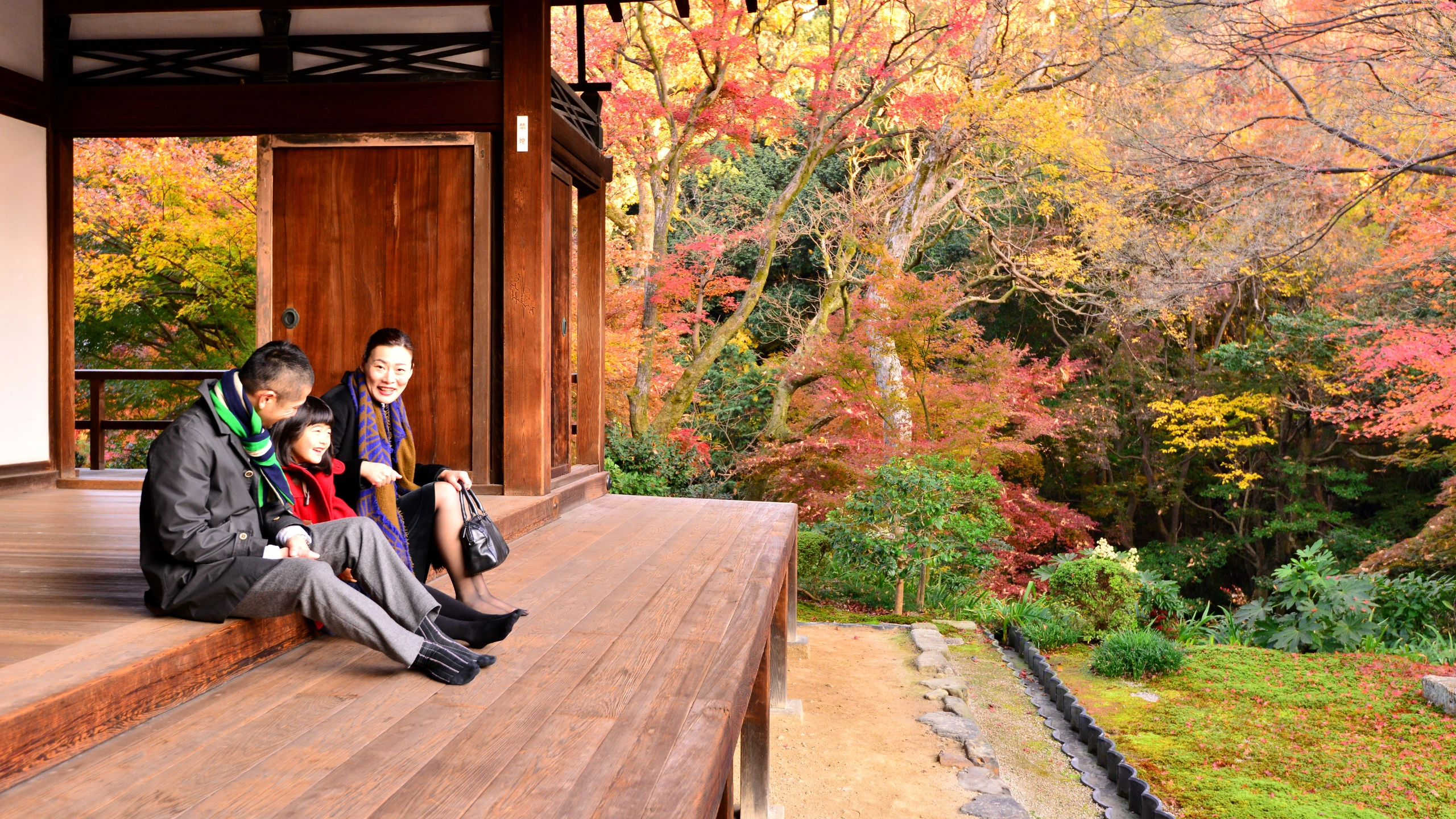
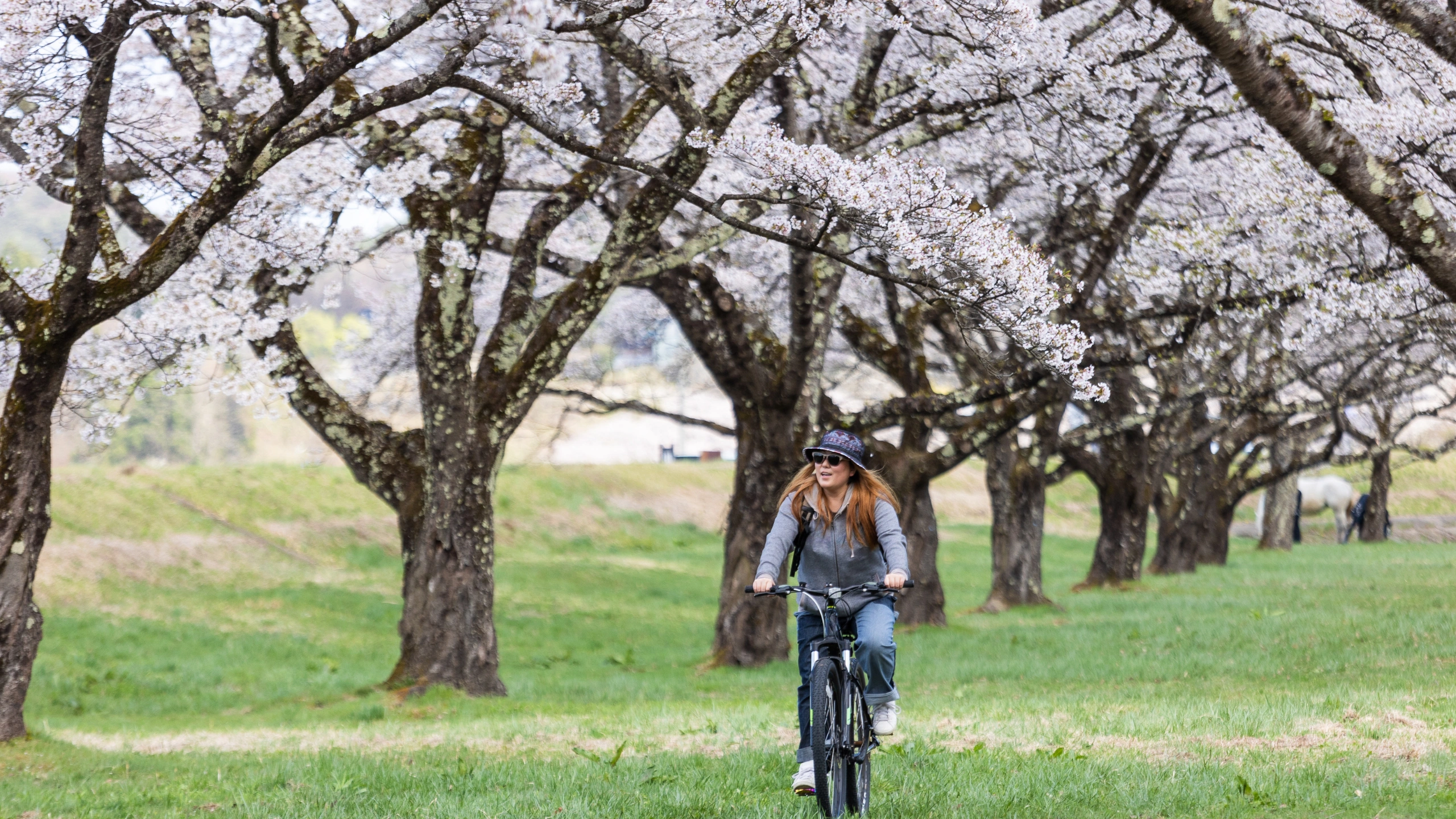
- Parks and gardens: Japan is also home to many public parks, lakes, and gardens, which are also peaceful spaces for a stroll that are especially beautiful during cherry blossom or autumn foliage seasons.
- Neighbourhood wandering: Exploring the backstreets and local neighborhoods is free, and it offers authentic glimpses of locals’ daily life.
- Festivals: Seasonal events bring music, food stalls, and parades. This way, you can experience Japan in one of the most authentic ways, usually with little to no cost.
- Museums and discounts: Many museums and attractions offer free or discounted entry on specific days. Rail passes also offer discounts on entry fees.
- Budget shopping: Don Quijote, Daiso and other ¥100 stores are perfect for affordable souvenirs, snacks, and travel essentials.
Comfortable stays that are kind to your budget
Here’s a look at a variety of budget accommodations that allows you to plan your Japan trip on a budget.
- Hostels, capsule hotels, and guesthouses
Hostels are popular with backpackers, often featuring shared kitchens, lounges, and bicycle rentals. Capsule hotels are compact, offering pods with basic amenities like TV, lights, lockers, and shared baths.
- Minshuku and business hotels
Minshuku are family-run inns that provide a traditional Japanese-style stay, complete with tatami rooms and sometimes home-cooked meals. Budget business hotels (like APA, Toyoko Inn, Route Inn) offer small private rooms with essentials like Wi-Fi, a desk, and private bathrooms.
- Vacation clubs like Club Wyndham Asia resorts
Club Wyndham Asia in Japan offer mid-range options for those wanting more comfort while staying budget-conscious. Kitchenettes allow you to cook, laundry facilities help you pack lighter, and many are centrally located, which can help you cut food and transport costs.
- Other options
Manga cafés and 24-hour baths can be used as overnight stays for around ¥2,000 to ¥4,000, though comfort is limited. There are also vacation rentals (such as Airbnb) and weekly/monthly mansions that are cost-effective for longer stays or groups.
3 quick tips for accommodation
- Book early during peak travel times (cherry blossoms, Golden Week, autumn leaves) since prices surge and rooms sell out fast.
- Avoid last-minute bookings as they are rarely cheaper in Japan.
- Staying a few stations outside the city centre can help lower costs, as trains make it easy to commute in.
What are the cheaper months to visit Japan?
Generally, the cheapest months to visit are during the low seasons, when tourist numbers drop and demand for flights and accommodation reduces.
Period | Why It’s Cheaper | What to Expect |
January to February | Post–New Year slowdown lowers demand for flights and hotels | Cold weather, fewer tourists, great for winter activities such as skiing in Hokkaido or enjoying onsen. |
Early June | The start of the rainy season (tsuyu) reduces travel crowds | Humid and damp weather, quiet period for tourism, and thus, lower prices. |
September | After summer holidays and before the autumn foliage season | Pleasant weather, discounted hotels and flights, fewer tourists |
Later November to early December | Shoulder period before Christmas/New Year rush | If you’re not specifically chasing autumn leaves, early December can offer a balance of lighter crowds and more manageable prices. |
Tip: Consider avoiding peak travel periods like cherry blossom season (late March to April), Golden Week (late April to early May) and Obon holiday (mid-August), when costs and crowds surge.
How much should I budget for a trip to Japan?
A reasonable budget for a trip to Japan depends on your travel style, duration, and preferences. This is a rough estimate for a 7-day trip.
Quick coolcation travel tips and packing guide
Category | Options & Tips | Estimated Cost |
Accommodation |
| ¥2,000 to ¥12,000/night |
Food |
| ¥1,500 to ¥3,500/day |
Transport |
| ¥500 to ¥2,500/day (city) ¥4,000 to ¥12,000 per long trip |
Activities & sightseeing |
| ¥500 to ¥2,000/day |
Miscellaneous | Souvenirs, snacks, essentials: | ¥1,000 to ¥2,000/day |
7-day total | Excluding international flights | ~¥80,000 to ¥150,000 |
A one-week Japan on a budget itinerary
Instead of rushing across the country, focus on one region for deeper experiences, which will also minimise long-distance travel costs. This sample plan covers Tokyo and Hakone.
Days 1-3: Tokyo on a budget
- Day 1: Arrival. Use local trains to get into the city and grab meals from convenience stores.
- Day 2: Explore Meiji Shrine (free), take a stroll along Harajuku’s and Shibuya’s lively streets, and visit the free Tokyo Metropolitan Government Building for panoramic views.
- Day 3: Visit Asakusa’s Senso-ji Temple (free), and take a train to Ueno Park, which has museums and public spaces for a nice break.
Days 4-5: Hakone’s nature and relaxation
Take a short trip to Hakone, a scenic mountain town.
- Day 4: Explore Lake Ashi, visit the Hakone Open-Air Museum, and ride the ropeway for views of Mt. Fuji.
- Day 5: Enjoy a morning onsen soak and then spend the day in the forests and walking paths, before returning to Tokyo.
Days 6-7: A final day of discoveries
- Day 6: Spend the day exploring a neighbourhood that’s on your list. For example, you could visit the electronic wonderland of Akihabara or the artistic streets of Yanaka. For meals, you could visit a local supermarket to get discounted bento boxes, sushi, and more.
- Day 7: Get a quick breakfast from a convenience store and then take a train to the airport.
Tip: If you’ve extra time, you could visit Nara Park for encounters with deer and cultural attractions, such as Todai-ji Temple, Kasuga Taisha Shrine, and Kofuku-ji Temple.
Making the most of Japan on a budget
Japan can be explored affordably with smart planning. Travel off-peak, utilise budget-friendly transportation, and opt for cost-conscious accommodations. Simple pleasures, such as a quiet visit to a shrine or a bowl of zaru soba, can make the trip truly memorable. Club Wyndham Asia offers the perfect way to immerse yourself in Japan and travel with peace of mind, knowing that you’ll return to reassuring comfort, and service, every day.
Ready to plan your trip to Japan? Discover our selection of budget-friendly accommodations and begin planning your itinerary today.